
Top Signs You Need Air Duct Cleaning Service – Don’t Ignore These
Most homeowners spot dust on a vent cover and assume the whole duct system is filthy. That dust is usually just normal accumulation on the grille, and it tells you almost nothing about what’s happening inside the ductwork. The signs that actually matter are quieter and each one points to a specific mechanical condition worth understanding. If you’d rather not sort through it yourself, call (877) 492-3448 and we’ll talk it through.
That’s the framing we want to give you here. Rather than hand you a generic symptom checklist, we want you to understand what each sign means mechanically, so you can tell the difference between a real problem and cosmetic grime. Your ducts work harder than you think, and the clues they leave are specific once you know what you’re looking at.
Visible Debris at the Registers Means Buildup Is Breaking Loose
When you pop off a return-air grille and see clumps of lint, debris, or gray dust sitting on the metal, that’s not the same as the light film on the surface. Those clumps are dislodged internal buildup that has broken free and settled where air passes most. It signals the lining and interior surfaces have accumulated enough material that it’s shedding under airflow.
This is the one visible sign that most reliably points toward duct cleaning in Northgate, especially in older homes where the system has run for years without service. Here’s what separates the two:
- Surface dust on the grille: normal, clean it and move on.
- Debris clumped inside the register boot or duct mouth: internal buildup shedding, worth a closer look.
- Particles on the floor directly below a register: a sign the material is actively blowing out, which points to restriction or a pressure imbalance.
If you’re seeing the second or third pattern, professional air duct cleaning with mechanical agitation is the way to actually remove that material rather than push it around.
Uneven Airflow Usually Comes Down to a Blockage or a Collapsed Run
Rooms that never get comfortable while others stay cold, weak airflow at one register and strong at another, or a room that used to get air and no longer does. Uneven airflow is one of the clearest mechanical clues, and it maps to one of a few causes: a restriction in the duct run, a disconnected or collapsed flex duct, or a damper stuck in the closed position.
In Northgate homes, we’ve seen all three. Renovation work is a frequent offender. When a remodel opens walls, drywall dust, insulation fibers, and construction debris find their way into exposed runs, and a disconnected duct behind new drywall isn’t always noticed until rooms turn stuffy. A collapsed flex run in an attic is another common one, especially where summer heat softens the liner over time.
What you can check safely: go room by room and feel the airflow at each register with the system running. Note which ones are weak. Check that the supply registers are open, and look for furniture or rugs blocking a return. If all registers feel weak, the issue is likely the blower or filter; if only some do, the problem is somewhere in the ductwork itself.
Musty Odor Points to Something Growing on the Liner or Coil
A persistent musty or damp smell that comes on when the system starts isn’t a duct cleaning problem in the ordinary sense. It’s a microbial growth signal, and it usually means one of two things: moisture is collecting somewhere in the system (often the evaporator coil), or the duct liner itself has held enough moisture to support growth.
This is where equipment capability matters. A basic duct cleaner will clean the ducts and leave the coil, and the smell comes back. We carry Abatement Technologies equipment because some of these jobs need remediation-grade handling rather than a standard sweep.
Sanitizing as a separate step also matters here. Cleaning removes the material; sanitizing treats the surfaces where growth took hold. If you notice the odor only in certain rooms or only on humid days, that’s information worth telling a technician before they arrive.
Safety note: don’t spray anything into your ducts to chase a smell. You’ll usually add moisture and make the underlying problem worse.
Higher Bills with Weaker Airflow Is the Most Reliable Combination
If your utility bills are climbing while airflow drops at the same time, that’s not coincidence, it’s restriction. A restricted duct system forces the blower to work harder to move the same volume of air, and the system runs longer to hit the thermostat setpoint. You feel it as weak output and see it as a higher bill.
Reduced airflow alone could be a clogged filter or a failing blower. Higher bills alone could be a refrigerant issue or a failing compressor. But the two together, in a home that hasn’t had ducts serviced in years, is one of the most reliable indicators of significant duct restriction we look at when evaluating a HVAC cleaning job.
- Check your filter first. If it’s clean and airflow is still weak, the restriction is likely deeper in the system.
- Look for a return-air register that seems to pull hard while supplies feel weak. That’s a pressure imbalance point.
- Note whether the problem came on gradually or suddenly. Gradual restriction tends to point to buildup; sudden points to a disconnected or collapsed run.
Renovation, Wildfire Smoke Season, and Vacant Homes: The Time-Based Triggers
Some homes need their ducts looked at based on what happened to them, not just how they behave. In Northgate, we see three recurring triggers worth knowing.
Post-renovation. Any drywall work, floor sanding, or cabinet install sends fine particulate into the return air path. Even with plastic sheeting up, some escapes. A post-renovation cleaning removes that before it settles into the system permanently.
Post-wildfire smoke season. When smoke settles in the region for days or weeks, particulate rides in through windows and returns, and some of it deposits on duct surfaces and in filter housings. If your system ran through a heavy smoke period with the fan on, it’s worth scheduling an inspection before the next heating season.
Vacant or closed-up homes. A property that sat vacant for a season or longer collects dust and humidity in the ductwork. Property managers in Northgate know this pattern well: the ducts were fine when the last tenant left, and the new tenant is sneezing within a week. A pre-occupancy cleaning resolves it.
When the Sign Isn’t a Duct Problem at All
Not every symptom points to duct cleaning, and knowing the difference saves you money. Three conditions look like duct problems but usually aren’t:
- Coil fouling: a dirty evaporator coil restricts airflow and causes weak output, but the fix is coil cleaning, not duct cleaning. If your system runs but delivers weak cool air and the ducts have been serviced recently, start here.
- Filter bypass: a filter that doesn’t seal correctly lets particulate slip around the frame and coat the blower and coil. That’s a filter-fit problem, and the cure is fixing the return-air filter track, not cleaning the ducts.
- Duct leakage: sealed ducts leak, and old systems often leak heavily at joints and connections. Leakage is a repair-and-sealing job, not a cleaning job (though cleaning usually comes first when the ducts are also dirty).
This is why we clean, seal, repair, and sanitize as one service rather than treating cleaning as the whole answer. If we inspect and find the real issue is a coil or a filter leak, we’ll tell you.
Your Self-Inspection Protocol: What to Check Before Calling
You can safely check several things yourself without touching ductwork or opening panels. Here’s a simple protocol:
- Change the filter and run the system. If airflow improves substantially, the filter was the problem.
- Feel each supply and return register. Note which ones are weak, and whether the pattern is one room or the whole home.
- Look inside the return register you can safely reach. Note whether you see settled debris or just surface dust.
- Smell the air at the first run of the day. A musty note at startup is worth mentioning.
- Check the thermostat records or your utility bills for the past few months. Note any trend upward.
- Ask when the ducts were last professionally serviced. If you don’t know, that’s your answer.
Don’t open duct panels, reach into supply runs, or spray anything into the system. Those steps are for a technician with the right tools.
Related services in Northgate: along with dryer vent cleaning (a separate but related fire-safety service we handle), we cover cleaning, repair, and sanitizing as one full-system job. One visit. The whole system.
The Bottom Line
If we had to rank the signs by how strongly they point to a real duct cleaning problem, we’d put debris at the registers and the combination of higher bills with weaker airflow at the top. Musty odor points to a growth issue that needs sanitizing, not just cleaning. Uneven airflow points to a physical restriction, and a post-renovation or post-smoke-season timeline is worth acting on even if you don’t see symptoms yet.
Dust on the grille is not the sign. Your ducts work harder than you think, and the signs that matter are the mechanical ones. If you’re in Northgate and need help sorting it out, Air Duct Cleaning Northgate offers free estimates. Call (877) 492-3448. We answer 24/7. Fast dispatch from 7am to 7pm.
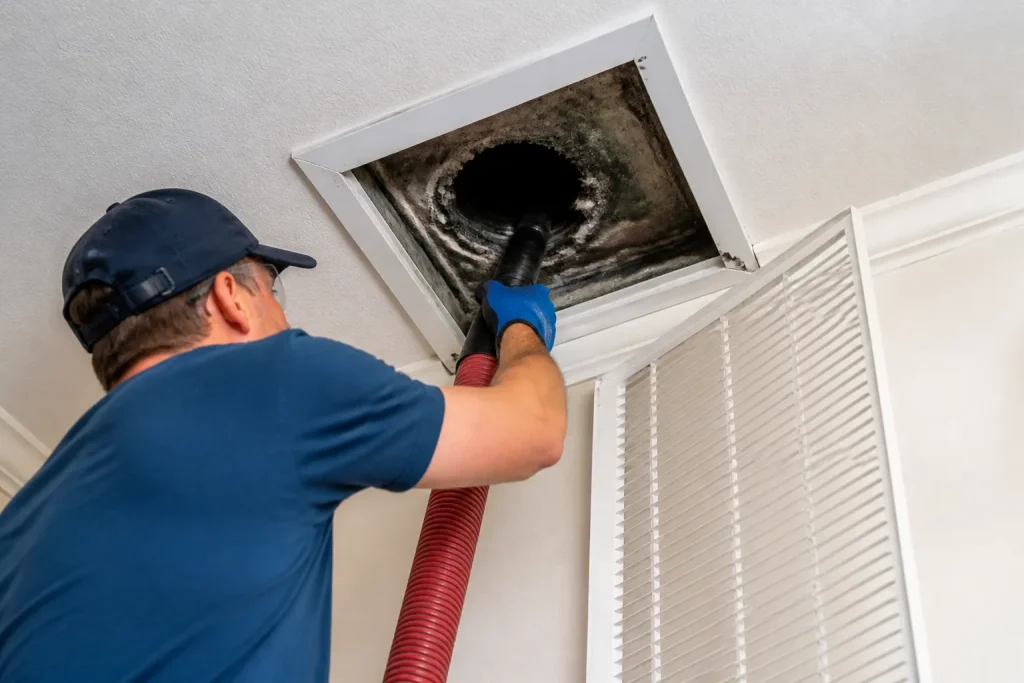
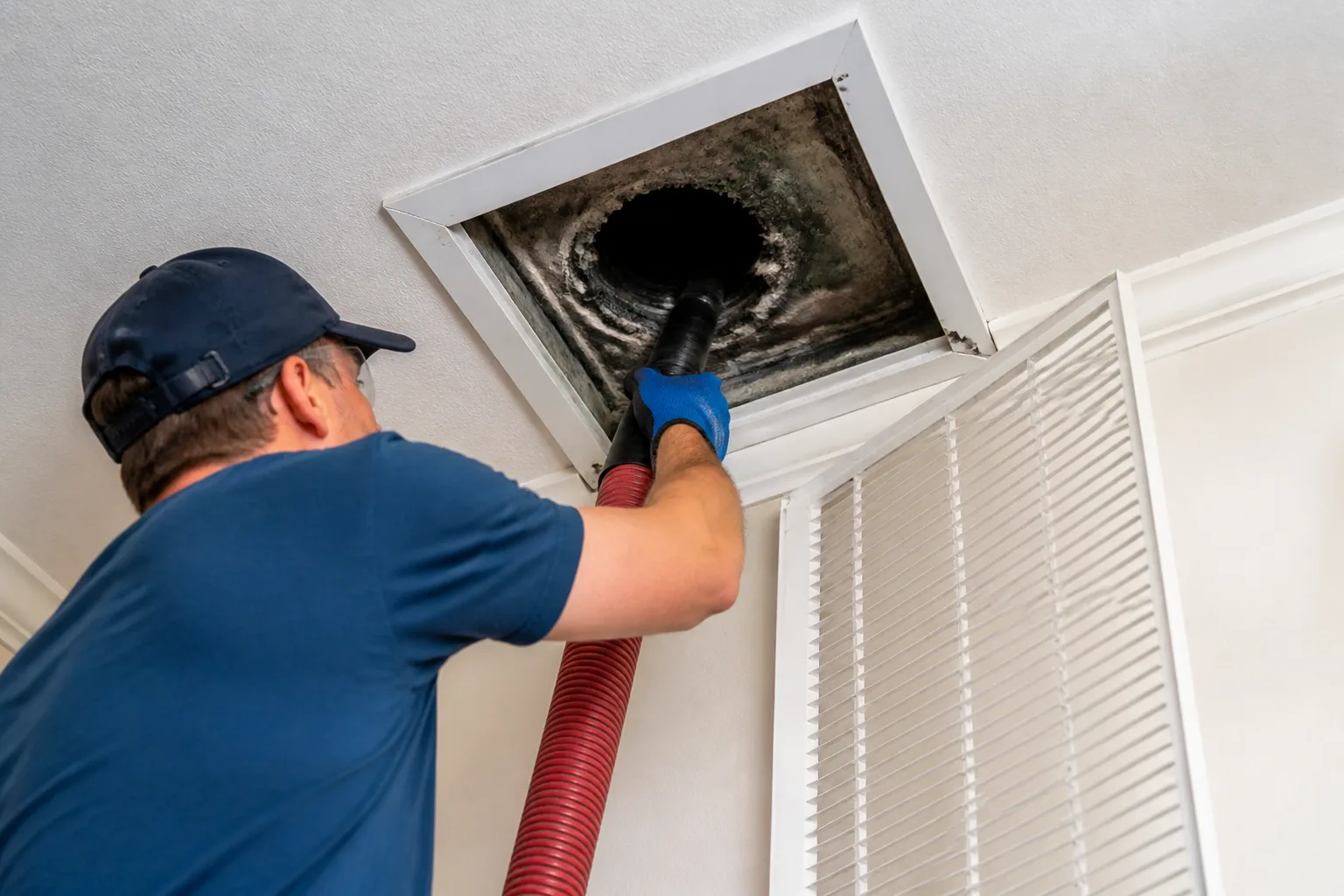
Our technicians have up to 9 years of experience, and they work with purpose-built equipment. That matters because we use a two-part approach: Rotobrush mechanical agitation to loosen buildup through the run, followed by Nikro negative-air extraction to pull it out of the system rather than blowing it into your living space. See the difference negative-air extraction makes when a technician walks you through it before and after. We don’t just clean. We seal, repair, and sanitize, so a dirty system with leaks doesn’t recontaminate itself two weeks after service.
Frequently Asked Questions
For most Northgate homes, every three to five years is reasonable if the system is well maintained. Homes with pets, recent renovation, or heavy wildfire smoke exposure may need it sooner. There’s no fixed rule, and a professional inspection will give you an honest answer for your specific system.
No. Surface dust on the grille is normal. Debris clumped inside the register boot or particles collecting on the floor below a register are the signs that point to internal buildup. Clean the grille first. If the debris returns quickly, that’s worth a call.
Yes, significant restriction forces the blower to work harder and the system to run longer. What matters is the combination: higher bills plus weaker airflow at the registers. Call (877) 492-3448 for a free estimate if you’re seeing both at once.
Cleaning removes debris and buildup. Sanitizing treats the surfaces where microbial growth may have taken hold. If you have a persistent musty odor, cleaning alone typically isn’t enough; sanitizing is a separate step and we treat it as one.
Written by the team at Air Duct Cleaning Northgate.
Need Air Duct Cleaning Help?
Call Air Duct Cleaning Northgate - the local pro we connect you with is licensed and insured, here with fast help in Northgate.
(877) 492-3448