
Rotobrush Air Duct Cleaning in Northgate: A Homeowner’s Guide
Most duct cleaning methods pull debris toward a central vacuum and hope it lets go on the way. Rotobrush dislodges and captures it at the same point, which matters when you’re dealing with years of compacted dust rather than a fresh layer. In Northgate’s older housing stock, that difference shows up in the ducts themselves. If you’d rather not sort through the equipment options yourself, call (877) 492-3448 and we’ll explain what your system actually needs.
What Makes Rotobrush Different From Traditional Duct Cleaning?
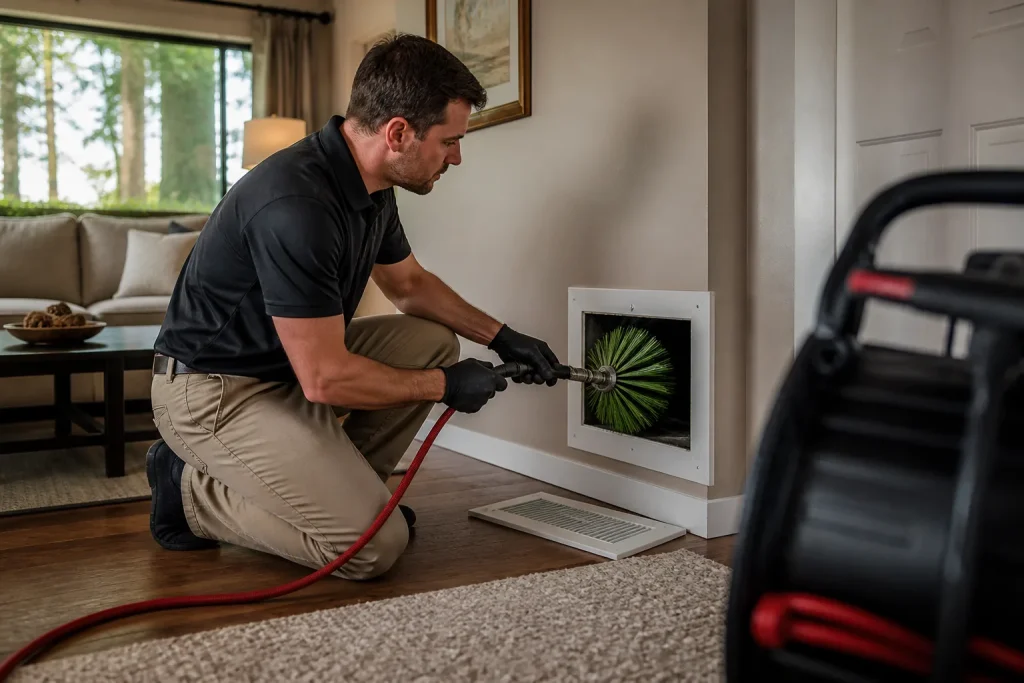
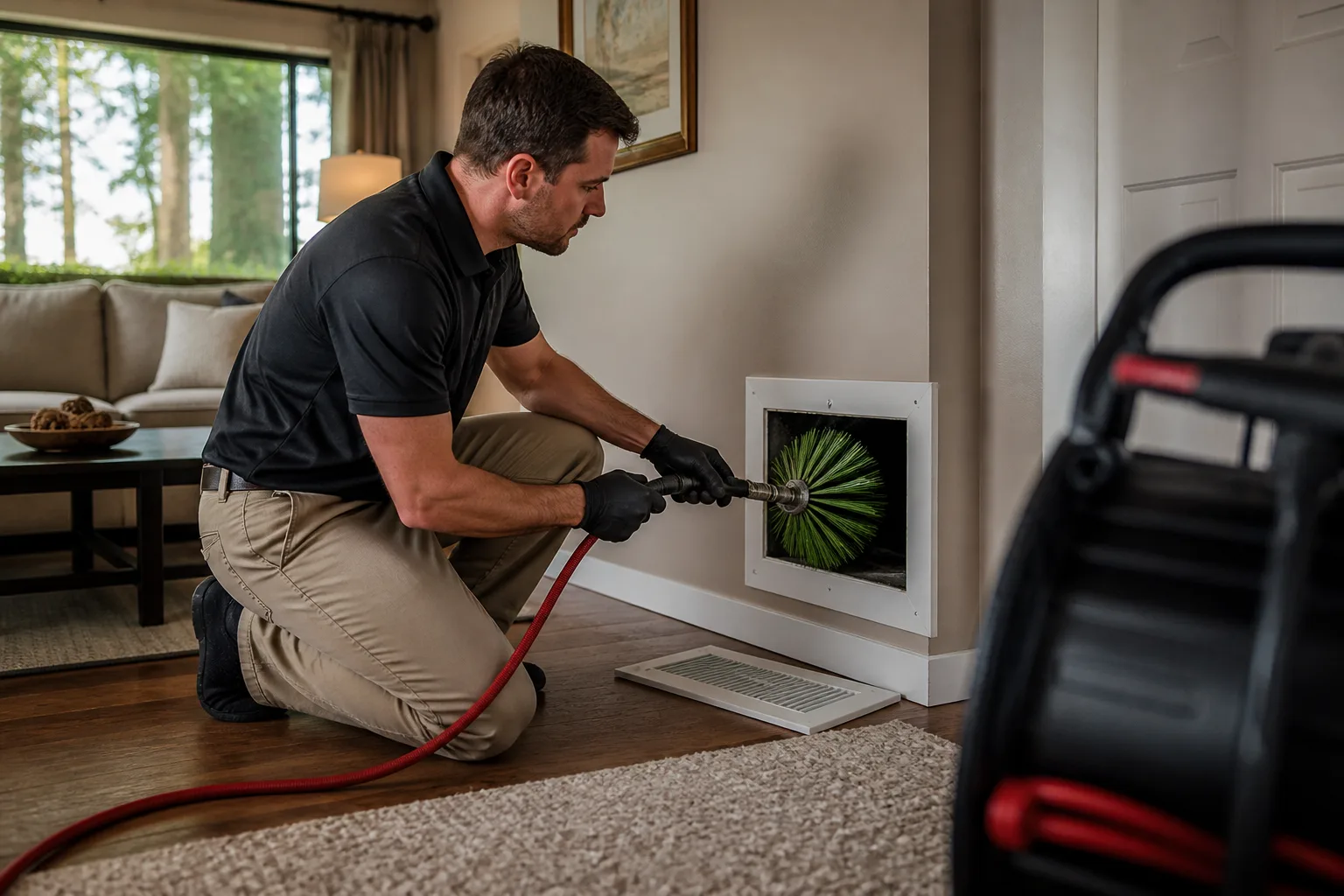
Rotobrush is a mechanical agitation system with an integrated HEPA vacuum, and that single design choice changes how the whole job works. Traditional duct cleaning usually splits into two steps: agitate the debris loose with a whip or air tool, then extract it with a separate negative-pressure machine. Between those steps, dust resettles. Rotobrush combines them, so the brush head scrubs the duct wall while the vacuum captures what it lifts, inches away from where the debris breaks free. Less escapes, less resettles.
Here’s the practical comparison:
- Traditional agitate-then-extract: a compressor whip or skipper ball loosens debris, then a truck-mounted or portable vacuum pulls it through the trunk line. Works well on light, loose dust.
- Rotobrush: a rotating brush head with a HEPA vacuum attached at the contact point. The brush reaches the duct wall and the vacuum takes the debris immediately, so compacted material doesn’t get a second chance to settle.
- Blow-and-go methods: compressed air pushed through the system with no real capture at the source. Debris moves, but it doesn’t leave. We don’t consider this cleaning in any useful sense.
For a Northgate home where the ducts haven’t been touched in years, the second method tends to produce a visibly different result. You can see it in the before-and-after photos of the duct interior, not just the register grilles.
Which Northgate Duct Systems Suit Rotobrush Best?
Rotobrush performs best on flex duct with embedded debris, branch runs, and smaller-diameter lines. That description covers a lot of Northgate housing. Homes built through the middle of the last century often have short branch runs feeding individual rooms, and many have been retrofitted with flexible duct during a furnace or heat pump replacement. Flex duct has a ribbed interior wall, and those ribs collect dust in a way smooth galvanized trunk lines don’t. Once it’s packed in, air pressure alone rarely moves it.
The rotating brush head is sized to work inside that ribbed liner without tearing it, and it reaches the branch runs that larger extraction equipment can’t navigate. Small-diameter lines are the usual weak spot: a central vacuum pulls hard on the main trunk but loses suction the further it gets from the source. Contact-point cleaning sidesteps that entirely.
Where Rotobrush is less useful on its own: heavily contaminated trunk lines, systems with significant mold growth, and any ductwork where the liner has already failed. Those jobs need negative-air containment and, in serious cases, remediation-grade equipment. That’s where Air Duct Cleaning Northgate pairs the Rotobrush with Nikro negative-air extraction and, when the contamination level calls for it, Abatement Technologies equipment. One platform doesn’t cover every system, and we’d rather tell you that than oversell a single tool.
Can Rotobrush Damage Duct Lining?
No, when the brush is correctly sized and calibrated for the duct it’s running through. That qualifier carries most of the weight. Rotobrush brush heads come in different stiffnesses and diameters, and the technician selects based on liner type. Flexible duct with a thin inner liner needs a softer, smaller head than rigid galvanized pipe. Run a stiff brush through aging flex duct at the wrong speed and yes, you can abrade the liner. Use the right head on sound ductwork and the risk is minimal.
What we check before any brush goes in:
- Liner condition. Flex duct that’s already torn, delaminating, or collapsing needs repair before cleaning, not after. air duct cleaning on failed liner just pushes debris into the cavity behind it.
- Access points. We cut inspection openings at strategic points so the brush enters straight and the vacuum captures at the same spot. Running a brush around a sharp corner is where damage happens.
- Brush selection. Diameter and stiffness matched to the duct type, not whatever’s already on the machine.
- Speed control. Slow and consistent at the wall beats fast and careless every time.
In our experience, most liner damage attributed to duct cleaning actually traces back to ducts that were already compromised and got cleaned anyway. Inspection first solves that. Ducts work harder than most homeowners realize, and a system with torn liner is a system that needs sealing, not scrubbing.
What Does a Rotobrush Service Visit Actually Look Like?
A Rotobrush visit runs through setup, inspection, cleaning, and verification, in that order. Here’s what to expect so nothing about the visit comes as a surprise.
- Walkthrough and system check. We look at the furnace or air handler, note register locations, and ask about symptoms: musty smells, uneven airflow, allergy flare-ups, dust settling faster than it should.
- Inspection openings. Small access holes cut at key points in the trunk and branch runs. These get sealed afterward.
- Negative-air setup. A Nikro negative-air machine connects to the system and holds the ductwork under vacuum, so anything the brush lifts has somewhere to go.
- Rotobrush pass. The technician works through each branch run and the trunk, brush head running against the duct wall with the integrated vacuum capturing at contact.
- Register and component cleaning. Supply and return grilles, plus accessible components in the air handler, get cleaned separately. This is part of HVAC cleaning, and skipping it leaves a layer of dust sitting right where the air passes.
- Verification. Before-and-after photos of the duct interior, taken through the access openings.
- Sealing and closing up. Access holes sealed, and any leaks found during inspection addressed through our duct repair and sealing work.
One visit covers the whole system when the job is scoped correctly. A typical Northgate home takes a solid part of a day, not twenty minutes. If a quote promises otherwise, ask what equipment is coming.
Is Rotobrush a Complete Solution on Its Own?
No. Rotobrush is a cleaning platform, and a good one, but a full-system job involves more than mechanical agitation. Think of it as the best tool for one specific stage: lifting compacted debris off the duct wall and capturing it. Everything around that stage still needs handling.
The pieces that complete a job:
- Negative-air extraction. A Nikro machine holding the system under vacuum while the brush works. Without it, the HEPA vacuum on the brush head does the heavy lifting alone, and the trunk line never gets the sustained pull it needs.
- Duct repair and sealing. Ducts with leaks recontaminate themselves. Cleaning a leaky system is like mopping a floor with the tap running, and we’d rather fix the tap. Sealing happens in-house, so you’re not hunting for a second contractor once the cleaning wraps.
- Sanitizing. When there’s microbial growth or persistent odor, cleaning removes the debris but sanitizing treats what’s left. That’s a separate step with its own product application, and it’s worth doing when the inspection calls for it.
- Filtration assessment. We work with Honeywell and Aprilaire systems, so we can look at your current filter setup and tell you whether it’s sized for the house. A filter that’s too restrictive or too coarse affects everything upstream.
Five services under one roof means the visit covers cleaning, repair, and air quality in one pass rather than three separate appointments. We also handle dryer vent cleaning while we’re there, which is a fire-safety item more homeowners should be thinking about.
When Should You Call a Pro Instead of Waiting?
Call a professional when you notice symptoms that point to the system rather than the room. Visible dust streaking from the registers, a musty smell that shows up when the heat or AC kicks on, rooms that never get the airflow they should, or allergy symptoms that ease when you’re away from home. Those point to ductwork that needs inspection, not another filter change.
Also worth a call: any home in Northgate where the ducts haven’t been serviced in years and nobody can say when they last were. Older flex duct with embedded debris doesn’t announce itself. It just quietly costs you airflow and air quality until someone looks inside.
If you’re in Northgate and need help, Air Duct Cleaning Northgate offers free estimates. Call (877) 492-3448. We answer 24/7. Fast dispatch from 7am to 7pm, Sunday through Friday. Our technicians have up to 9 years of experience, and the local pro is licensed and insured as their state requires. One flat price per system, agreed before work starts.
The Bottom Line
Rotobrush earns its place in a duct cleaning visit because it solves the problem other methods work around: debris that’s stuck to the duct wall rather than loose in the airstream. For Northgate homes with older flex duct, branch runs, and years of accumulated dust, that contact-point approach produces a cleaner result than agitate-then-extract alone. But it’s one tool in a full-system job. Negative-air extraction, duct sealing, and sanitizing complete the picture, and skipping any of them leaves the job half done.
What you should take away:
- Rotobrush brushes and vacuums at the same point, which matters most on compacted debris in flex duct.
- Brush calibration and liner inspection come first. Correctly sized, it won’t damage sound ductwork.
- Rotobrush alone isn’t a full solution. Pair it with negative-air extraction and sealing for a complete job.
- Before-and-after photos of your own ducts tell you whether the work actually happened.
- Ask what equipment is coming before you book. The answer separates a real clean from a blow-and-go.
If you’re in Northgate and want an honest read on what your system needs, call (877) 492-3448 for a free estimate.
Frequently Asked Questions
They solve different parts of the job, so the honest answer is that a complete clean usually uses both. Truck-mounted negative pressure pulls hard on the main trunk and is excellent for large-diameter lines. Rotobrush reaches into branch runs and scrubs compacted debris off the duct wall at the contact point. Pairing the two covers what neither does alone. Call (877) 492-3448 for an exact quote. Estimates are free.
Ask for before-and-after photos taken inside the duct through the access openings, not just pictures of the register grilles. Interior photos show whether the duct wall is clean. A company that can’t produce them hasn’t given you a way to verify the work. Call (877) 492-3448 for an exact quote. Estimates are free.
Cheap quotes usually skip equipment. No negative-air machine, no access openings, no interior photos, sometimes just compressed air through a register. What you’re paying for is the thoroughness, and a low number often means a short visit with no capture at the source. Ask what equipment is coming before you compare prices. Call (877) 492-3448 for an exact quote. Estimates are free.
Most homes don’t need it on a fixed schedule. Every few years is reasonable for a typical Northgate house, sooner if you’ve had renovation dust, pets, smokers, or visible debris at the registers. If the ducts were never serviced and the home is older, one thorough cleaning establishes a baseline. Call (877) 492-3448 for an exact quote. Estimates are free.
Written by the team at Air Duct Cleaning Northgate.
Need Air Duct Cleaning Help?
Call Air Duct Cleaning Northgate - the local pro we connect you with is licensed and insured, here with fast help in Northgate.
(877) 492-3448